Posts written by Ginny

Pickled food is often a side dish in Japanese cuisine but it’s one of the must-have items that many Japanese households have for meals. Almost anything can be pickled. (Here’s a previous post on some pickled foods: http://www.transparent.com/japanese/pickled-food/) For example Rakkyōzuke (ラッキョウ漬け) is a type of pickled onion that is used as a side dish to curry. The rakkyōzuke is consumed to offset some of the spiciness of the curry.

Kasuzuke (粕漬け) refers to a type of pickling method whereby fish or vegetables are pickled in the yeast of sake (). The picture on the left is an example of a fish that has been pickled in sake kasu (酒粕). Sake kasu is a type of yeast that can be found in sake that serves as a powerful pickling agent. When fish is pickled in using sake yeast, there is a pungent to mild taste. However when vegetables are pickled in this way, they can taste sweet or mild.

Nukazuke (糠漬け) is a type of pickling method where vegetables are fermented in nuka () or ‘rice bran’. Some people use cornflakes or wheat bran as an alternative to rice bran, but whatever is used, it is mixed with kelp, salt, water and sometimes wine, beer or ginger. Then vegetables like radish, cucumber, carrots, eggplants are placed in this mixture and left for a few days to ferment. For a strong flavor some people even ferment the vegetables for a month.

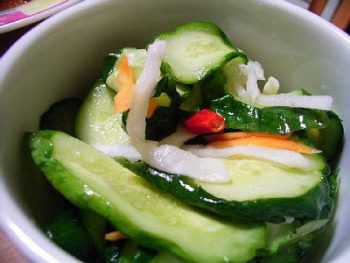
Asazuke (浅漬け) is a type of pickling method where vegetables are pickled for a very short time period. Due to the short time period, asazuke vegetables are less pungent and contain some of the original freshness of the vegetable. The vegetables commonly used for asazuke are cucumbers, carrots, daikon (大根) or radish, eggplant and hakusai (白菜) or white cabbage. The vegetables are pickled in salt or vinegar that range from an hour to several hours.

Dragons are a familiar staple of Japanese fables. Take for example the water dragon deity Mizuchi (). In one story Mizuchi came to Emperor Nintoku (仁徳天皇) in a dream. Mizuchi offered to prevent the flooding of a river in exchange for a human sacrifice. One of the men chosen as a sacrifice saved his own life by waging a bet with Mizuchi. If Mizuchi could sink a calabash into the water, then the man would willingly take his own life. Since the calabashes floated to the top of the water, the man won. This story about Mizuchi may have been a metaphor for the mysterious benevolence and malevolence of rivers. On the one hand Mizuchi/rivers are life sustaining by providing water for irrigation and other uses but on the other hand Mizuchi/rivers are unpredictable and can take unwilling victims through floods and other disasters.

Ryūjin (龍神) is the name of another water-dragon deity in Japanese mythology. Ryūjin was the father of the beautiful princess Otohime (乙姫),who was the grandmother of Emperor Jimmu (神武天皇). Emperor Jimmu was the first emperor of Japan and it is from this lineage that the royal families of Japan have claimed to be descended from divine entities like the water dragon Ryūjin. Dragons are considered powerful creatures so it’s only natural that the royal families of Japan would want their ancestry to be associated with a deity like Ryūjin. In one story Ryūjin sent a jellyfish out for an errand. When the jellyfish returned without completing the errand, the water dragon deity beat the jellyfish until all its bones were broken. This was a story used to explain why the jelly fish now has no bones. Like with Mizuchi and Ryūjin, dragons were used to give meaning to unexplainable phenomena.

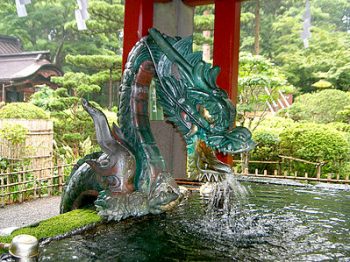
Kuzuryū (九頭龍) is a nine-headed dragon that is worshipped in many parts of Japan. In the town Hakone (箱根町) there is a famous fountain of Kuzuryū. The local legend states that Kuzuryū settled on Lake Hakone and demanded the townspeople a human maiden as a sacrifice. A priest named Mankan (万巻上人) decided to prevent future victims by chaining the powerful dragon to an underwater rock. A shrine was built near the area where the ferorious dragon was chained. From that day onward, the townspeople have worshiped a shrine that is dedicated to the dragon and instead of offering human sacrifice they set aside offerings of steamed rice with red beans.

Eating mushrooms is good for the health and tasty too! It’s a good thing that there are many varieties of mushrooms used in Japanese cuisine! Probably the most internationally known Japanese mushroom is a type of mushroom called Shiitake (シイタケ) Mushrooms. Shiitake Mushrooms are sometimes used as garnish for misoshiru or miso soup (味噌汁). They are also good to buy if you have a tight budget because they are relatively cheaper than other mushrooms.

The Enokitake (エノキタケ) mushrooms are easily obtainable mushrooms that you buy at your local supermarket. The ones in the supermarket are cultivated mushrooms. The cultivated variety is long, thin and white colored, but the enokitake mushrooms that grow in the wild are often shorter and darker in color. Enokitake mushrooms are often used in Japanese soups. Studies show that enokitake mushrooms possess antioxidants and may even boost the immune system.

Matsutake (松茸) mushrooms are hard to obtain. That’s part of the reason why they are very pricy. One of the reasons why matsutake mushrooms are so sought after is its smell. Matsutake mushrooms have this spicy, fragrant smell that provides a pleasant odor for soups and stir fried dishes. The demand for matsutake mushrooms is so high in Japan that some Japanese people are willing to buy imported matsutake mushrooms.


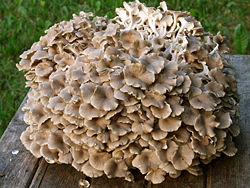
Maitake (舞茸) mushrooms are fan shaped mushrooms with multiple layers that grow in clusters. This mushroom can be found growing in great quantities in the northeastern part of Japan. It’s especially prized for its medicinal properties and used in Japanese dishes like nabemono (なべ物), which is like a kind of steampot dish. Research shows that maitake contains a wealth of minerals and may even help regulate insulin, glucose and blood pressure.

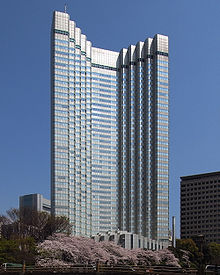
If you’ve ever wondered where to go to see the best marvels of architecture, look no further than the Shiodome City Center (汐留シティセンター). The Shiodome City Center is large, beautiful, light blue skyscraper that is headquarters to airline and travel industries. In addition, there are many restaurants that feature Korean, French, Indian and Japanese cuisines. There is also a post office, an ATM and even a dental clinic, so you can get all your errands done at the Shiodome!


The Dentsu Headquarters Building (電通本社ビル) is 48 floors high with a sharp, angled look. It is headquarters for the Dentsu Corporation, which is an advertising agency. It is truly an ecofriendly building with a roof that collects rainwater so that it can be recycled and reused and specially made windows that can adjust the temperature by adding shades or adjusting to the outside weather.


The Izumi Garden Tower (泉ガーデンタワー) is a dark green building that is 708 feet high. The Izumi Garden Tower contains a high-end hotel, luxury apartments and other amenities like a fitness club, restaurants, small shops, office space, bank, convenience store, hair salon, bakery, coffee shop and a bookstore. The basement of the Tower is connected to the subway, so you don’t have to ever leave the building to get to a place!


The Grand Prince Hotel Akasaka (グランドプリンスホテル赤坂) is a luxury hotel in Tokyo. After the big tsunami and earthquake in March of this year, the Grand Prince Hotel Akasaka housed many evacuees and refugees. Since last year there have been plans to bulldoze the hotel so there won’t be many chances to see this great hotel in person, but at least you can still see pictures of this hotel!

The kimono (着物) is the single most iconic representation of traditional Japanese culture. The word ‘kimono’ is a generic term to describe a type of traditional Japanese garment that comes in a t-shaped robe, but the kimono is anything but generic. There are many different and unique kinds of kimonos that are worn for certain occasions. The most varied types of kimonos can be seen more dramatically in the women’s kimono.

For example, the Furisode (振袖) is a kimono with especially long sleeves. These kimonos are worn by girls at coming of age ceremonies and by unmarried relatives of the bride’s side of the family. Usually the furisode is a kimono worn by young women and girls who are not yet married. Therefore the subtle message of a girl or woman wearing a furisode is supposed to indicate to others of her youth and non-marital status.


Mofuku (喪服) is a type of formal kimono worn by the family members of the deceased. Mofuku is a kimono that is mostly made of black silk. Even the obi () or sash is entirely black. The only part of the mofuku that is not black is the white kamon (家紋) or crests on the upper part of the kimono. The mofuku is worn only to show that the relatives of the deceased are mourning. It is never worn for happy or festive occasions.


Uchikake (打掛) is a highly formal kimono worn by the bride in a traditional Japanese wedding. The uchikake is actually a type of coat worn over the kimono, but it is still considered part of the kimono. There are two kinds of uchikake. One type is made entirely of white silk while the other type is heavily brocaded with red, gold and other colors. With red uchikake, there are often animal and flower patterns that line the uchikake.


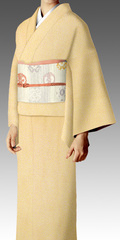
The Iromuji (色無地) is a type of kimono that is made with a single color. There are no patterns or designs on the entire kimono. Compared to the furisode and the red uchikake, the iromuji is quite plain, but that’s because the iromuji is often by women who attend or preside over tea ceremonies. Tea ceremonies can be rather solemn, so the single colored iromuji is actually quite an appropriate choice for this type of an event.

Back to the Top