
One day you’re gathering with hundreds of library professionals for a panel discussion about how US libraries are supporting citizenship seekers.
The next day (literally) USCIS announces a new version of the US Citizenship test. More questions asked. More topics covered. Not much time to prepare.
For librarians and citizenship educators looking for a new resource to use with your citizenship classes or recommend to self-studiers, we’ve been working on something to help bridge the gap.
The American Citizenship Course (2025 Version) is now available in Transparent Language Online in English and Spanish!
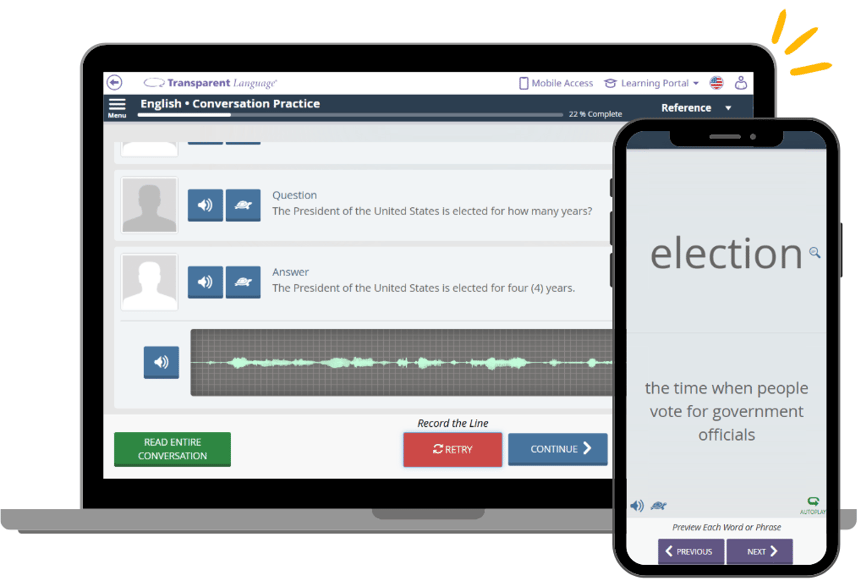
As with the 2008 version of the course, the goal is to help learners make the most of their time. Learners can jump around the course completing only the parts they need, whether that’s skipping entire units because they’re familiar with that topics or skipping activities within a lesson because they just want to practice test questions.
Each lesson incorporates:
So what’s new in the 2025 version?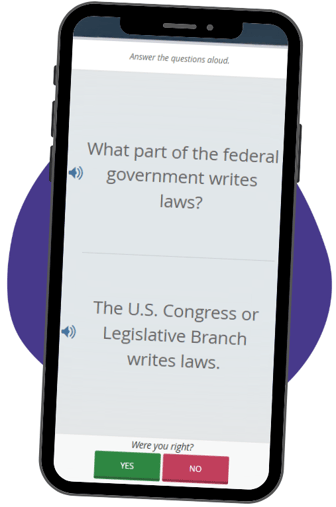
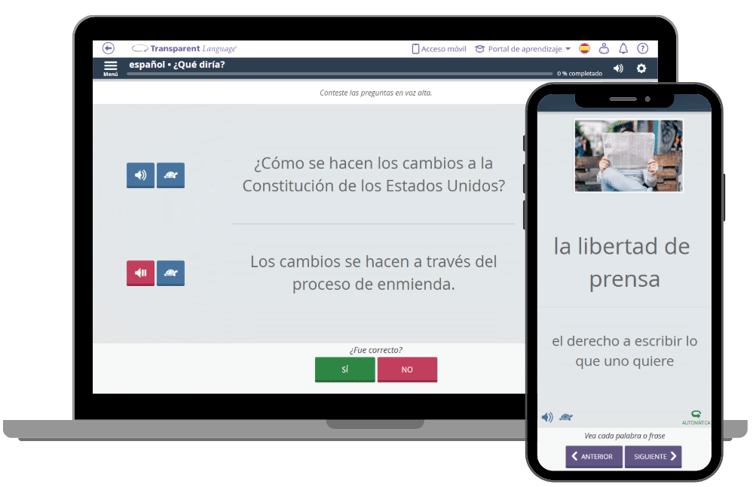
A Spanish version of the course is also available, ideal for test takers who qualify for the 50/20 or 55/15 exceptions or whose native language is Spanish and would benefit from learning more complex concepts in their own language first before moving on to English.
It includes everything from the English version fo the course (all cultural and historical slides, vocabulary, and practice activities) just in Spanish!
Learners can find the course by selecting “Spanish, Latin American for Spanish, Latin America speakers” as their language, then visiting the “Courses & Lessons” tab where the course will be waiting for them.
Ready to start recommending this course to your patrons and students? “American Citizenship Course (2025 Version)” is available now for all English language pairs in Transparent Language Online.
If your library or organization doesn’t subscribe yet, you explore the course in the two-week free trial.
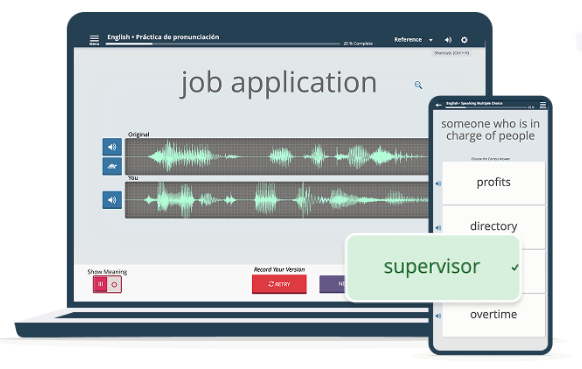
Give your patrons 300+ hours of English courses with Transparent Language Online. designed to meet the many needs of your community. From newly arrived immigrants to job hunters to citizenship seekers.

