If your library serves Chinese-speaking patrons, knowing a few words of Mandarin can really improve their relationship with the library. A greeting in their language tells them they are welcome, and knowing key terms helps you point them to the right resources faster.
Mandarin Chinese for Library Professionals is a free, self-paced course in Transparent Language Online for all library staff and volunteers. Eleven modular units cover everything from greetings and numbers to everyday library tasks, like issuing library cards and signing up for summer reading. Lessons use Pinyin, so you don’t need to read Chinese characters to learn.
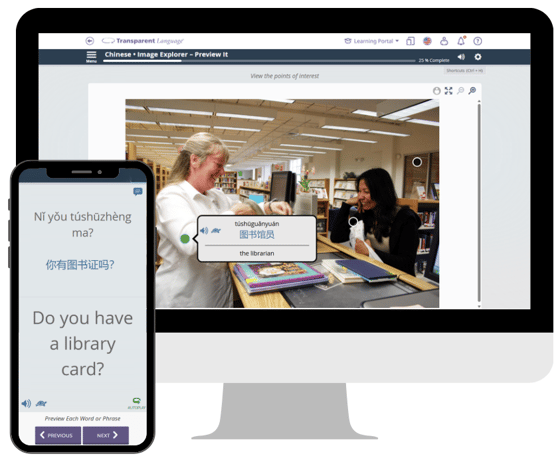
If your community is home to many of the 4+ million Mandarin speakers in the US and Canada, sign up to start learning Mandarin for free and better serve them in their own language!
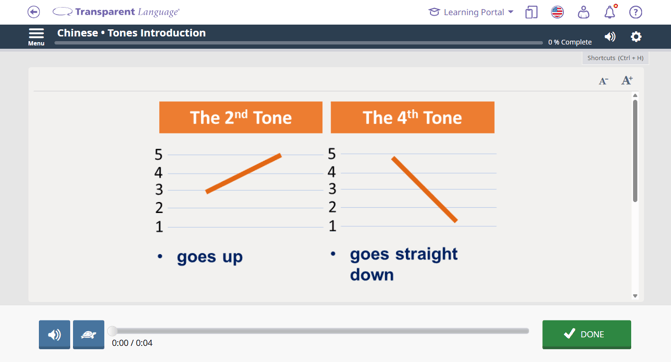
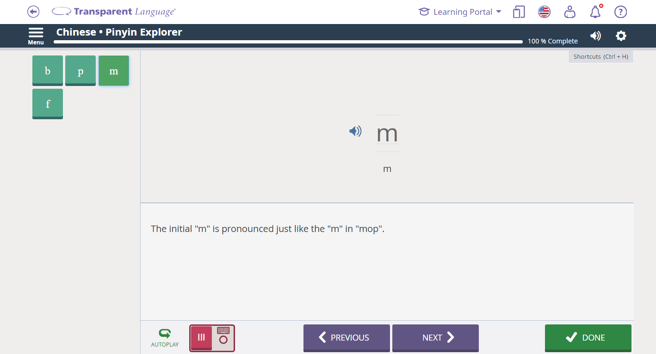
Mandarin Chinese for Library Professionals is intended for beginners. No prior language experience is required, but if you’re starting from scratch we recommend starting with the beginner Tones and Pinyin courses also available in your Transparent Language Online account:
Each of the 11 units in Mandarin Chinese for Library Professionals covers a common library interaction:
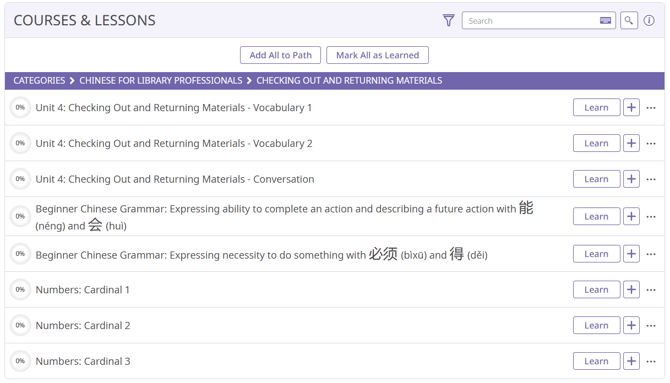
Each unit has four lesson types:
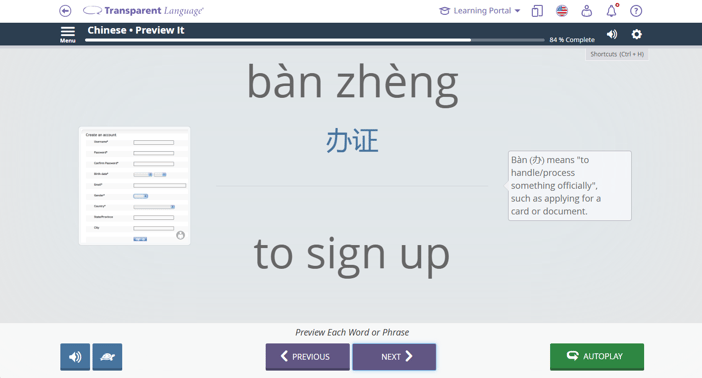
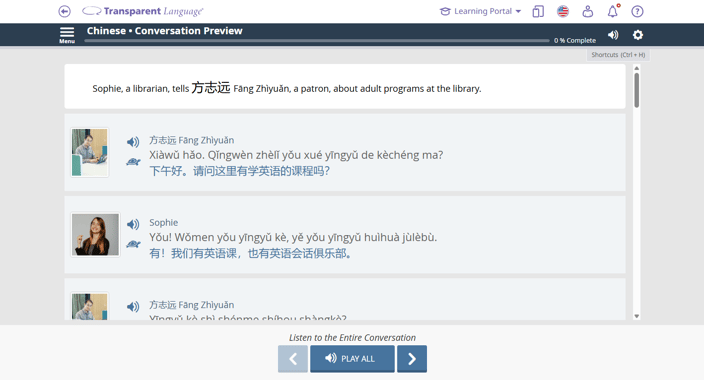
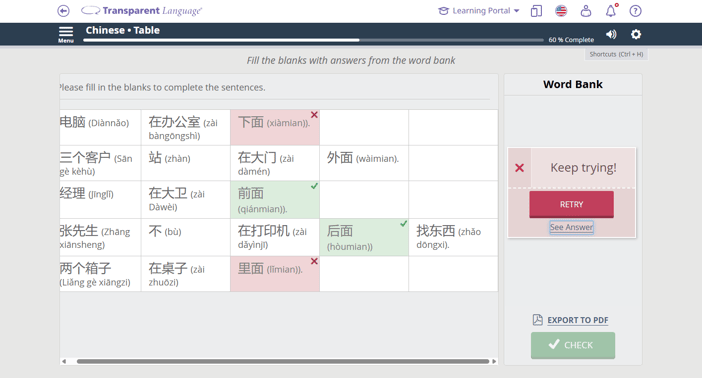
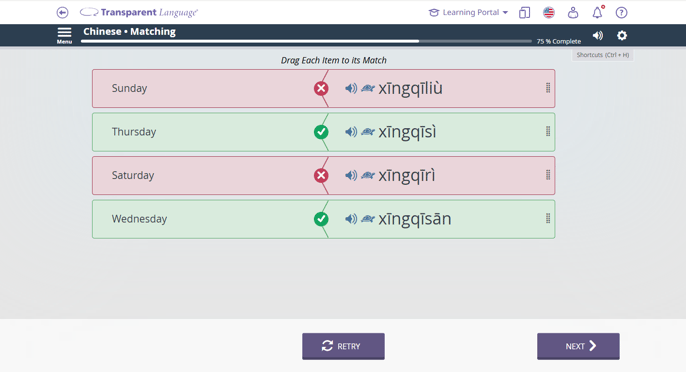
Multiply that by 11 units, and it’s quite a large course. We know library workers are busy. That’s why the course is modular. You can work through the units in any order, skip units entirely, or only complete the parts of each unit that are relevant for your role in the library. If your branch is gearing up for summer reading, jump straight to Unit 9. If you field lots of questions about the library computers, start with Unit 5.
A little! Along with practical vocabulary, the course briefly introduces aspects of Chinese culture, which can help you connect with patrons beyond the transaction at the desk.
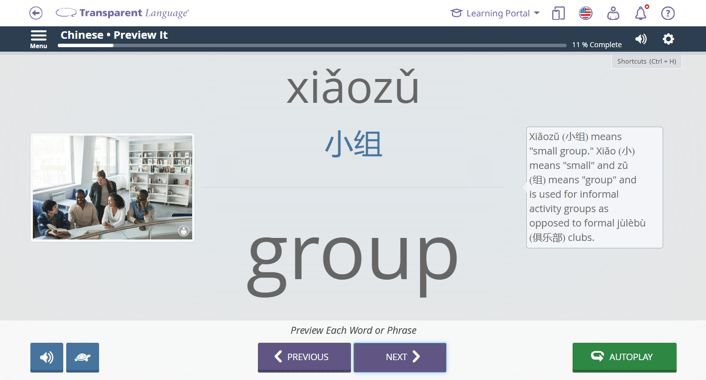
Culture is incorporated through subtle comments in vocabulary activities, which introduces concepts like formality. Culture comes up in short notes inside the vocabulary activities, such as this one about formality. This comment explains that xiǎozǔ (小组, “small group”) is used for informal activity groups, while jùlèbù (俱乐部) refers to more formal clubs. That kind of detail helps you describe a program the way a patron expects to hear it.
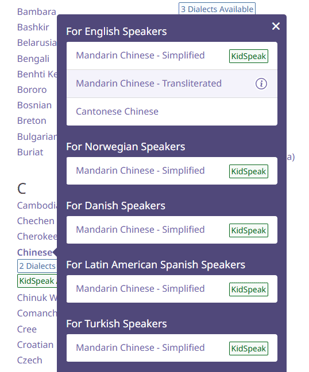
Mandarin Chinese for Library Professionals joins our collection of four free language courses for library professionals, so your team can build skills in the languages your community speaks most:
|
Course |
Units |
Lessons |
|
Spanish for Library Professionals |
11 |
77 |
|
French for Library Professionals |
11 |
76 |
|
Mandarin Chinese for Library Professionals |
11 |
71 |
|
Survival ASL for Librarians |
5 |
28 |
The Spanish and French courses introduce the same 11 library topics as the Mandarin course. Survival ASL for Librarians has its own approach as it was created in partnership with the ASL experts at Signing Savvy and uses video-based lessons to help you communicate with Deaf and hard-of-hearing patrons.
Sign up now to start learning or spread the word with your library colleagues! And if you'd like to request a new language course for library professionals, reach out to us at libraries@transparent.com.
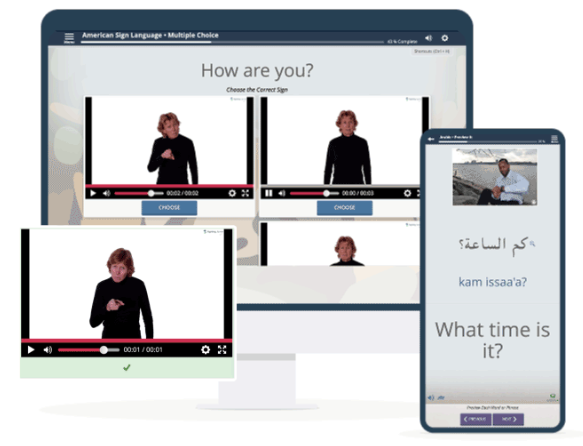
ESL. ASL. Indigenous languages. And so much more. Available anytime, anywhere, on any device in Transparent Language Online. Explore the whole collection before providing it your library community.
Meaghan is a lifelong language learner and lover, having learned French in a classroom, Hausa taught in French in Niger, and Spanish during a last minute move to Honduras. She loves helping libraries bring language learning to their communities.