
Every language learner has different goals. Some want to read, write, and speak a new language. Others just want to hold a conversation. If you're in the second group, we've got you covered.
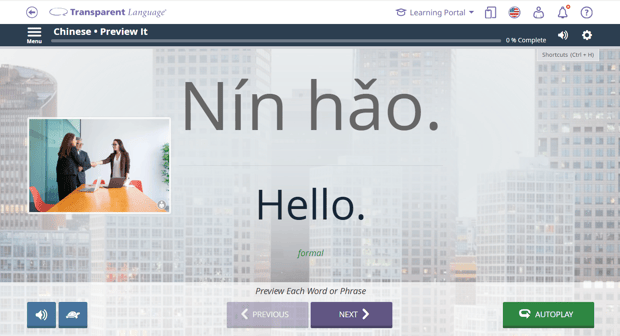
Many of our courses in Transparent Language Online come in transliterated versions, so you can jump right into speaking Russian or Chinese without learning a new alphabet first.
Why go phonetic?
The biggest perk of romanization (writing a language in the Latin alphabet) is speed. If you don't have the time or desire to master a new writing system, you can still pick up enough to get by in conversation.
Picture someone heading to Seoul for a two-week business trip or to Morocco for a friend's wedding. They're not going to master Korean or Arabic before they board the plane, but a handful of spoken phrases can go a long way. Phonetic spellings let them focus on what they'll actually use: speaking.
This is especially handy for languages like Korean, Japanese, and Chinese, where learning the native script is a big project. Even dedicated learners sometimes choose Transparent Language Online's phonetic spellings to get talking sooner. We also offer phonetic transcriptions for languages with more approachable alphabets, like Arabic, Russian, Hindi, and Greek.
When phonetic spelling backfires
Romanization isn't always a good idea. For languages that already use the Latin alphabet, like Spanish, French, or German, phonetic spellings can do more harm than good.
The problem is interference. If you learn a word as "boo-EH-nohs DEE-ahs," that version can stick in your head and get in the way of recognizing and spelling the real thing ("buenos días"). It's the same reason schools don't teach kids to read using "simpel fonetik" spelling: any head start isn't worth the confusion later.
Besides, you don't really need it. When language learning meant a book and maybe a cassette tape, phonetic spellings were the best way to show how a word sounded. Now you can just hit play and hear a native speaker say it.
So don't let an unfamiliar alphabet stop you from reaching your language goals! Dive right in with transliterated courses in Transparent Langauage Online.
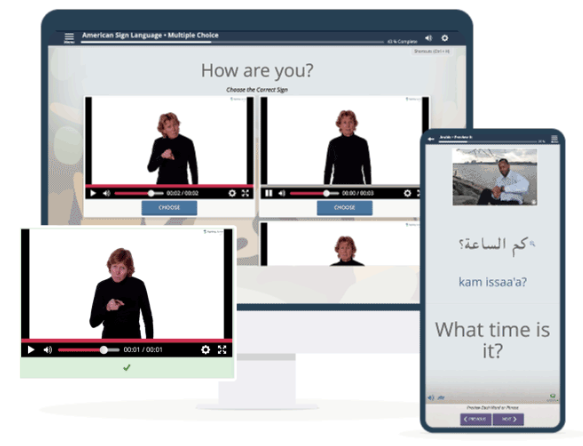
Master the alphabet, build vocabulary, practice pronunciation, and explore new cultues with Transparent Language Online. Available free via thousands of libraries worldwide.

