
If Latin is a dead language, why is it still so useful in modern life?
In an educational system that prioritizes STEM and hard skills, where spoken languages can be swapped out for coding languages, it can be hard to drum up interest in Latin. But the so-called “dead language” complements nearly any skill set in any field.
Almost half of all English vocabulary is rooted in Latin, which comes with obvious grammatical and syntactical benefits. But understanding these roots benefits more than just your SAT scores. Latin roots define modern medicine, science and math, from the symbols on the periodic table to the word integer (which means whole in Latin) which describes whole numbers. Latin is also the language of governance and law, from habeas corpus to referendum.
For homeschool parents, school districts, libraries, and anyone in between interested in providing Latin, we have added an Introduction to Latin course to Transparent Language Online.
The Introduction to Latin course is a two-level course: Level I and Level II. Each level has 8 units, for a total of 16 units in the course.
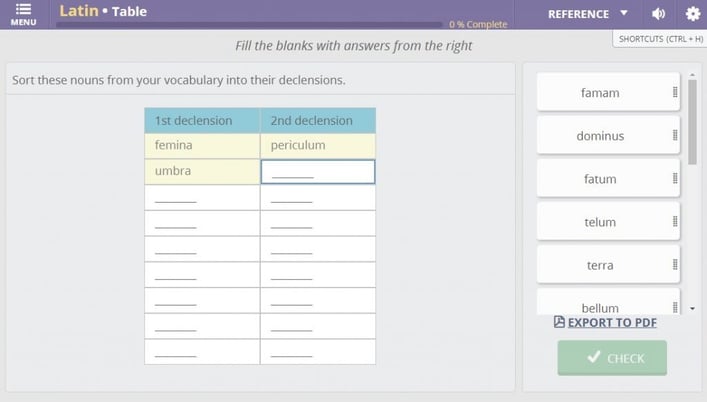
Each unit contains 3-5 vocabulary lessons and 1 grammar lesson. Each vocabulary lesson teaches approximately 15-20 useful and frequently occurring words and phrases (that’s approximately 1,200 words and phrases in the entire course!) The grammar lesson uses the newly-acquired vocabulary in contextual grammar drills.
Finally, each unit ends with an assessment that tests all material learned in the unit. A Scope and Sequence is also provided that details the course structure and the topics covered in each lesson.
Vocabulary lessons contain 15-20 vocabulary items each, for a total of 600 per level (1,200 in the entire course).
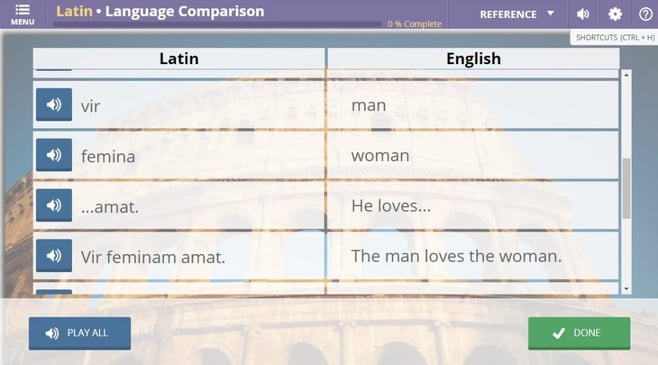
Vocabulary items are built up in sequence to illustrate how morphology changes depending on sentence structure. Vocabulary is also accompanied by images and annotations that explain both the grammar and historical context behind the chosen words and phrases.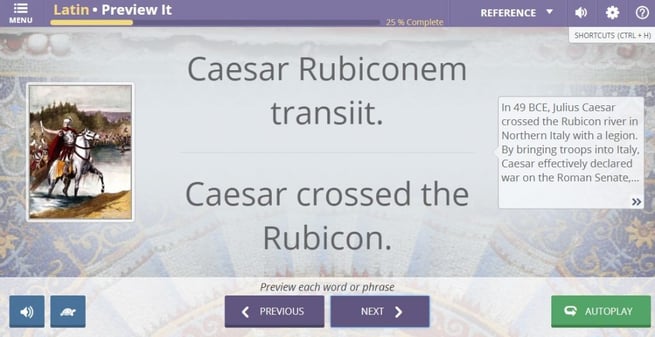
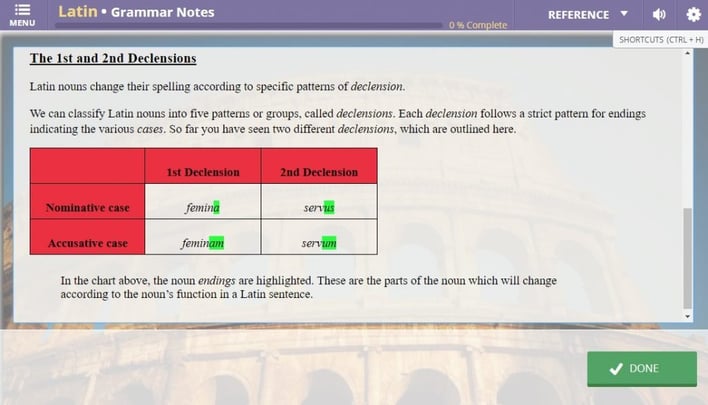
Each unit has one grammar lesson, which includes:
Schools and Educators: Latin teachers can incorporate the course into their curriculum, but districts or universities without a dedicated Latin program can also offer it as an independent learning resource. The admin portal allows educators or administrators to make assignments, track and report on student progress, and message with students. Learn more about our educator resources here.
Homeschoolers: Students can learn independently while parents supervise from afar. The course comes with a separate admin account through which parents can track progress, including time spent learning and assessment scores. Learn more about our homeschool resources here.
Individuals: Any novice-level learner with an interest in Latin can subscribe to the course and learn on their own. We recommend searching for a library near you that offers free access!
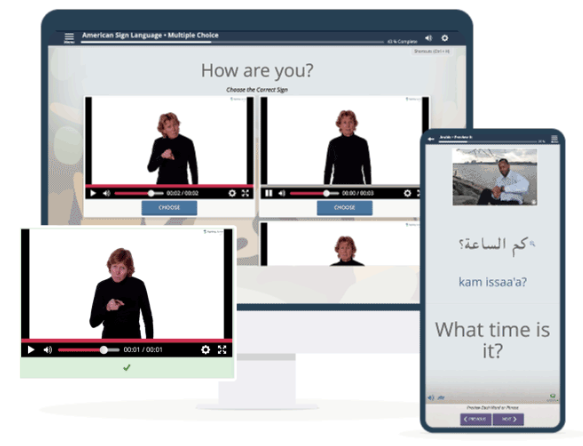
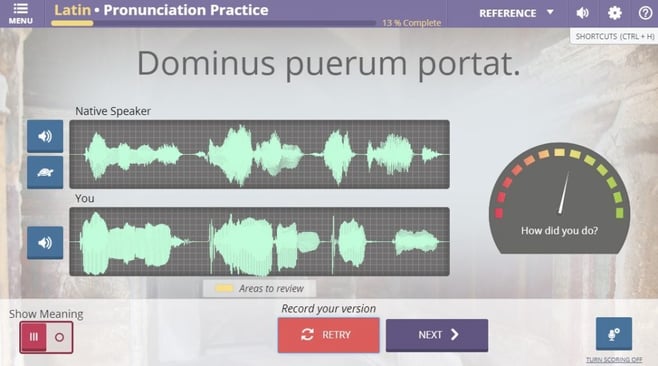
Build vocabulary, practice pronunciation, and more with Transparent Language Online. Available free via thousands of libraries worldwide.

