
For many language learners, a new alphabet is enough to stop you from ever learning.
Or the thing you skim over before getting to the good stuff.
But every word you’ll ever read, write, hear, or say is built from the same small set of letters and sounds. If you don’t truly know those building blocks, every later step gets harder.
Our alphabet courses try to find that perfect Goldilocks middle ground: substantial enough to master an intimidating alphabet but streamlined enough that it gets you to the “good stuff” as quickly as possible.
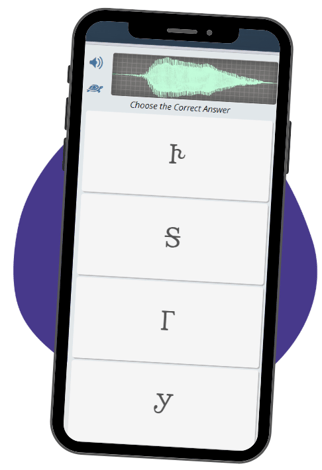
Alphabet courses are available in Transparent Language Online in 40 languages*, from familiar Latin-alphabet languages like French and Spanish to scripts that are totally new: Arabic, Chinese, Russian, Korean, Hindi, Thai, and many more.
Whatever you’re studying, the course walks you through a 5-step process so you can learn letter names, shapes, and sounds:
*As of May 2026, the 40 available languages include: Arabic (Iraqi + MSA), Armenian, Baluchi, Bambara, Bosnian, Bulgarian, Chechen, Chinese (Pinyin), Danish, Dari, English, Farsi, French, Georgian, German, Greek, Hebrew, Hindi, Hungarian, Indonesian, Italian, Japanese (Hiragana + Katakana), Khmer, Korean, Mongolian, Norwegian, Pashto, Portuguese (Brazilian), Punjabi (Shahmukhi), Romanian, Russian, Somali, Spanish, Swahili, Swedish, Tagalog, Tamil, Thai, Turkish, Urdu
Built around how memory works
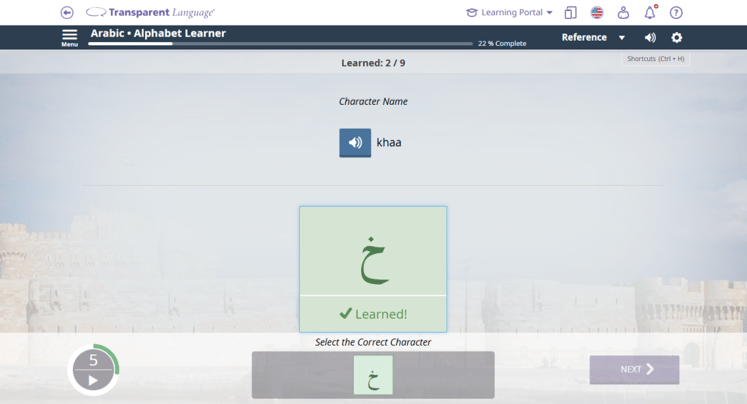
What makes these courses different from a one-and-done flashcard pass is how it adapts. Each activity tracks which letters you’re shaky on and feeds them back to you more often, while easing off the ones you’ve genuinely mastered.
One learner put it this way:
“I felt that [the Alphabet Learner activity] was the first that really challenged my retrieval skills. I liked how it drilled me more on the letters I got wrong.”
Why you should always start with the alphabet
If you’re studying a language that uses a familiar alphabet, it’s tempting to skip this kind of activity entirely. Don’t.
Even within the Latin alphabet, letters carry sounds you weren’t taught in school: the rolled Spanish r, the German ü, the silent letters that change everything in French. Alphabet courses are low-stakes way to retrain your ear and your mouth before bad habits set in.
And if you’re tackling a new script from scratch? Spending real time here is the single best investment you can make in everything that comes next. Reading speed, listening comprehension, and even speaking confidence all trace back to whether the alphabet feels native or foreign in your head.
Find a library near you that offers Transparent Language Online to start learning.
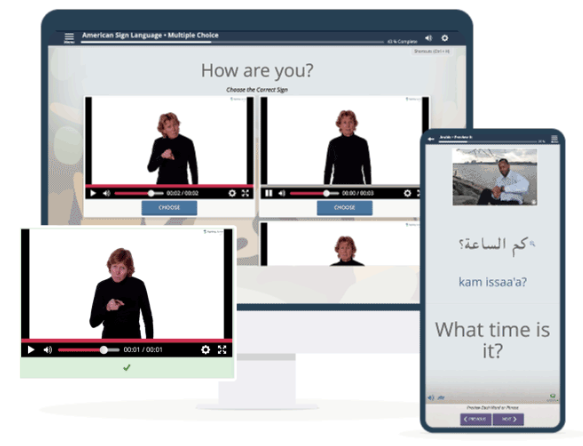
Master the alphabet, build vocabulary, practice pronunciation, and explore new cultues with Transparent Language Online. Available free via thousands of libraries worldwide.

