
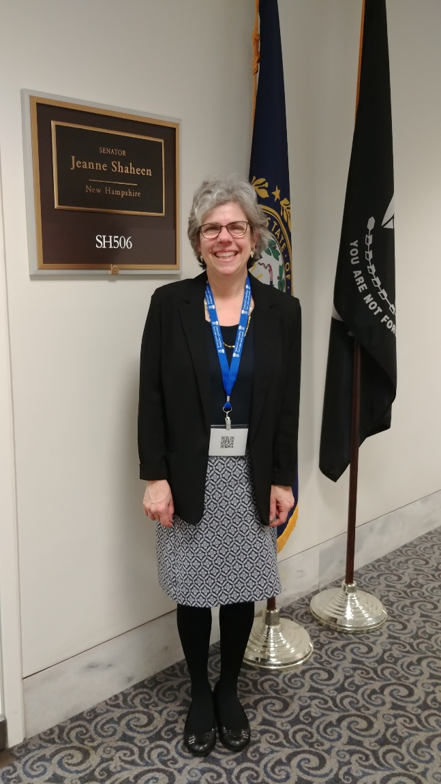
A few weeks ago, our Senior Executive Lorie Roule participated in the Joint National Committee for Languages and the National Council for Languages and International Studies (JNCL-NCLIS)-sponsored annual Language Advocacy Day on Capitol Hill.
“Why do you focus so much on vocabulary in your language courses?”
Language learning happens everywhere, and learners encounter unknown words daily while reading the news, browsing social media, and beyond.
That’s why you can now add to and edit your Learned Vocab!
We’re feeling very fourtunate to receive our fourth consecutive Platinum Award in LibraryWork’s 2019 Modern Library Awards! Providing language learning opportunities to library patrons must really be our fourte. (Okay, that’s all of our number puns… four now.)
When learning a language, there’s one skill that’s more neglected than the others. It’s underestimated both in terms of its complexity and its utility. It’s less glamorous than speaking, and more difficult to master than reading. Listening, unfortunately, is the black sheep of language learning.
If Latin is a dead language, why is it still so useful in modern life?
Educators’ confidence in digital tools is increasing, but legitimate concerns remain. Not all ed tech is designed or implemented equally, so how can language teachers find the right tools to meet their needs—and the needs of their students?
Learners can explore more than 140 languages in Transparent Language Online
But the most learned language is... English!
And now advanced level English learners can keep improving with the new Advanced Conversations in English courses, covering medicine, finance, and sales and marketing.
Studies show that vocabulary size is the most significant individual factor contributing to language proficiency.
I came across an interesting question on Quora recently. The asker wondered which was more important: speaking a language correctly and properly or successfully communicating an idea at the expense of eloquence.

