Turkish is spoken by approximately 56 million people
worldwide. Most Turkish speakers live in Turkey, though a substantial number of people
also speak Turkish in Bulgaria, Uzbekistan, Kazakhstan, Kyrgyzstan, Tajikistan,
Azerbaijan, Greece, and Cyprus. There are also over a million Turkish speakers in Germany
and other northern European countries, due to the large number of "guest
workers" of Turkish origin. Additionally, a number of Turkish dialects can be heard
throughout different regions of Turkey. The Istanbul dialect evolved into what is
considered Modern Standard Turkish.
Turkish is an important member of the Turkic language group
which includes Gagauz, Azerbaijani, Turkmen, and Khorasan Turkic. The Turkic language
group is a branch of the Altaic language family which includes the Mongolian and Tungusic
languages.
Until 1928, five years after the founding of the Turkish Republic, Turkish was
written in the Arabic script, due to the enormous Islamic influence on the area. After
language reforms were initiated in 1928, Turkish began to be written in a Roman-based
alphabet with 28 letters. This new alphabet adopted special phonetic symbols that
correspond to specific sounds in the language. The old writing system was outlawed and
soon became obsolete. In the transition to a Roman alphabet, many words of Arabic and
Persian origin were purged from the language.
Some English words of Turkish descent include
caviar,
yogurt, and
shish kebab. Also, the word
tulip is derived from the
Turkish word for
turban, because the flowers shape was thought to resemble a
turban.
English speakers will find many differences between
Turkish and English grammar. One of the most distinctive characteristics of the Turkish
language is agglutination: the practice of adding on multiple suffixes to word stems to
indicate grammatical functions such as number, gender, or tense. Often, a single word with
various suffixes can convey the meaning of an entire phrase or sentence. Understanding the
meaning of some of these lengthy words can prove especially challenging, as some suffixes
have multiple meanings.
Vowel harmony is another essential aspect of the Turkish
language. Turkish vowels are divided into two classes: front vowels and back vowels. Vowel
harmony means that all vowels in a given word should belong to the same class, as well as
the vowels in suffixes added to the word.
Turkish nouns have six cases: nominative, genitive,
accusative, dative, locative, and ablative. Verbs must agree with their subjects in both
case and number. As with nouns, suffixes are added to verbs to signify grammatical
function.
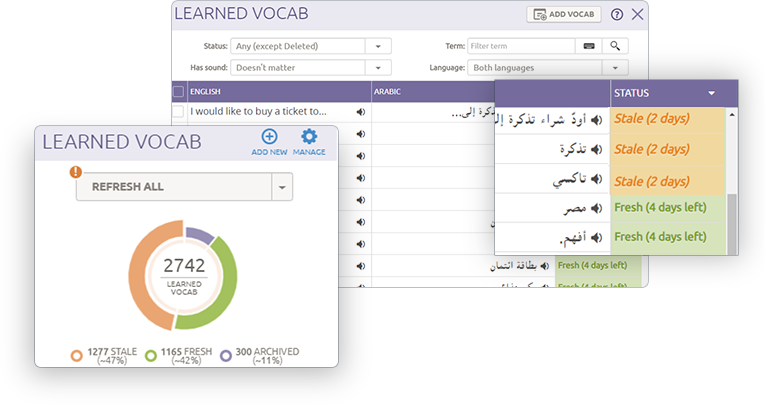
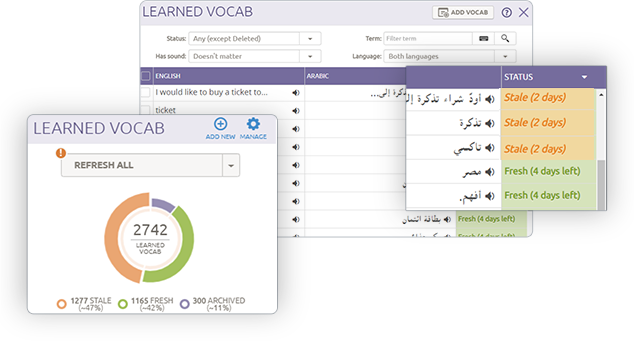
Many people study languages but stop using them and forget
what they have learned. That's why
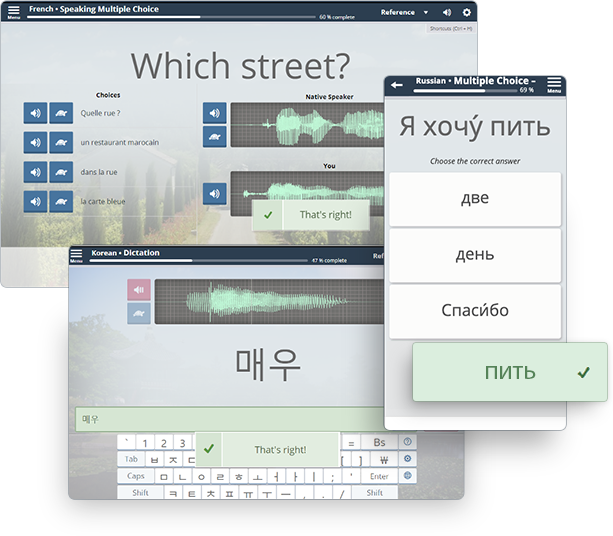
Turkish software programs can be so useful. Now that you can use and enjoy Turkish independently with
Transparent Languages
Languages of the World software package, not
only will you learn it, but you will also remember it. In addition, if you use other means
to learn Turkish, you will enhance your new skills since you are using it regularly. We
wish you all the best with your study of Turkish!