Logo
Contact Us Customer Service Tech Support
Learn Swedish Language
Swedish Learning
About Swedish
Swedish Products
Games
Quizzes
Resources
Learn Swedish with Free Software Downloads

Mailing List


Sign up to receive our product updates and special offers.

Your email address:


Overview of the Swedish Language

Around nine million people speak Swedish (Svenska). It is the national language of Sweden, as well as the second official language of Finland. The Swedish language is also spoken by groups in the United States, ever since nineteenth-century immigrants brought the language with them to Minnesota. Swedish is not the only language of Sweden, however-- the 15,000 Laplanders who herd reindeer in the north speak their own language (Sami), and there is a population of Finnish-speaking Swedes along the Finnish border.

The Swedish language - like Norwegian, Danish, and Icelandic- is a modern dialect of the language spoken by Viking warriors in the tenth century. These Nordic languages belong to the Germanic branch of the Indo-European family. For the most part, speakers of one Nordic language can understand speakers of others (although Icelandic, which has changed very little since the Viking Age, presents difficulties for many Europeans).

Modern Swedish is considered to begin with a Swedish translation of the Bible published in 1526. Over the next hundred years or so, the modern Swedish language took shape based on the Svea dialect spoken in Stockholm.

Formal and Informal Address in the Swedish Language

Contemporary Swedes are reserved by comparison with their ancestors, and their avoidance of superlatives is a linguistic reflection of that fact. The formal pronoun ni (you) has now been replaced by the informal du in everyday conversation, but people still avoid using each other’s names when speaking. It strikes them as overly personal. Given this aloofness, it might surprise an American to hear two Swedes greeting each other with "Hej!" (pronounced just like the English "hey!") in a formal situation. But it is the polite way to say hello.

Swedish Vocabulary and Swedish Pronunciation

Many Swedish vocabulary words will look familiar to English speakers learning Swedish: hand, finger, son, man, bank, radio, England, and so on. But don't let yourself be lulled into assuming that you know the meaning of every Swedish vocabulary word that resembles an English word! There are many false cognates as well. Barn means child; men means but; dog means died; dig is the object form of "you" and god is good (a linguistic observation, not a theological one).

Another thing to be aware of is the pitch accent (or tone-accent) that gives Swedish pronunciation its characteristic singsong quality. The acute (high-toned) and grave (low-toned) pitches are not indicated in the written form of the Swedish language; they can only be learned by listening to Swedish pronunciation.

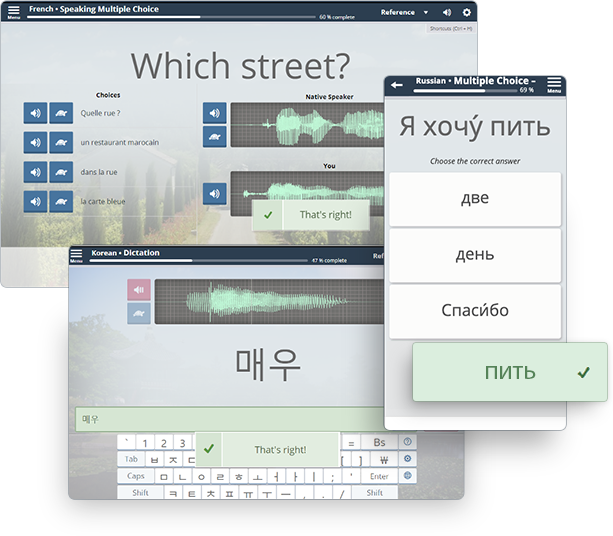
Regular practice is necessary to learn to speak Swedish well. That's one reason why good Swedish software programs can be so useful for Swedish language learning. It's easier than ever to learn Swedish and to begin to speak Swedish with the language resources and Swedish language software from Transparent Language. With SwedishNow!, Before You Know It, and our other language learning products, you will speak Swedish, learn Swedish vocabulary, conjugate Swedish verbs, understand Swedish grammar, and master Swedish pronunciation quickly. Best of luck with your Swedish language learning!

Learn Swedish Now!


Home | About | Products | Languages | Store | Partners | Contact Us | Customer Service | Technical Support

If you have comments about this language learning site, language software, or ways to learn languages, please contact us.
©2007 Transparent Language. All Rights Reserved. www.transparent.com
Please also visit our language websites:
Arabic | Chinese | Dutch | French | German| Hebrew | Irish | Italian | Japanese | Latin | Polish | Portuguese | Russian | Spanish | Swedish