Free Language-Learning Resources
Free Language-Learning Resources
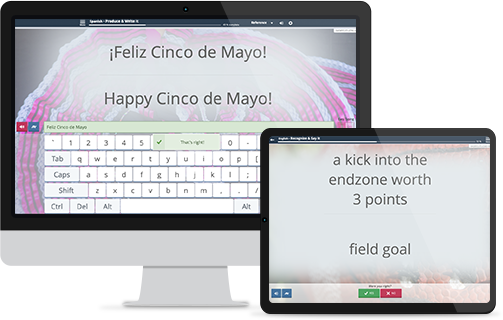
Besides offering the best, most integrated and customized language learning experience for you as an individual, we also offer a wealth of free resources, from Word of the Day to our language and culture blogs, to help make language learning a part of your life.
Join our social community of over 3 million friends, fans, and followers, and share your love of language studies!
Language Blogs
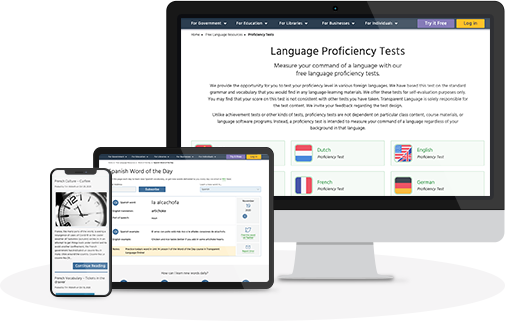
Follow our company blog to learn more about our language learning products, or our language and culture blogs below for posts about your target language grammar, culture, and more.
Choose your language:
Arabic, Chinese, Danish, Dari, Dutch, English, English for Portuguese, Esperanto, Farsi, French, German, Greek, Hebrew, Hindi, Icelandic, Indonesian, Irish, Italian, Japanese, Korean, Latin, Norwegian, Pashto, Polish, Portuguese, Russian, Spanish, Swedish, Thai, Urdu, Vietnamese
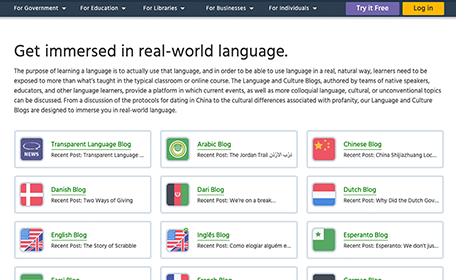
Word of the Day
Visit this page each day to learn vocabulary, or get new words delivered to you every day via email or RSS feed.
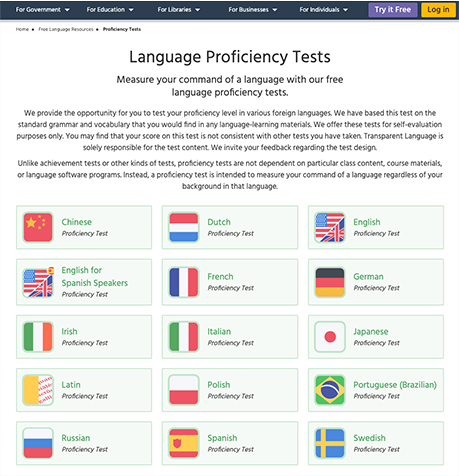
Proficiency Tests
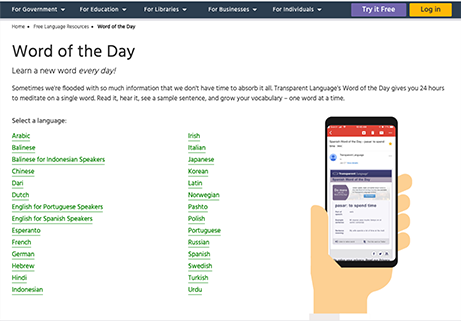
Measure your command of a language
We provide the opportunity for you to test your proficiency level in various foreign languages. We have based this test on the standard grammar and vocabulary that you would find in any language-learning materials. We offer these tests for self-evaluation purposes only. You may find that your score on this test is not consistent with other tests you have taken. Transparent Language is solely responsible for the test content and we invite your feedback regarding the test design.
Unlike achievement tests or other kinds of tests, proficiency tests are not dependent on particular class content, course materials, or language software programs. Instead, a proficiency test is intended to measure your command of a language regardless of your background in that language.
Choose your language:
Chinese, Dutch, English, ESL-English, French, German, Irish, Italian, Japanese, Latin, Polish, Portuguese, Russian, Spanish
Become a fan and get our free stuff
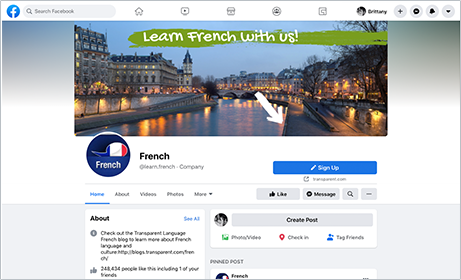
Choose your language:
Afrikaans, Arabic, Chinese, Danish, Dari, Dutch, English, Esperanto, Farsi, French, German, Greek, Haitian Creole, Hebrew, Hindi, Icelandic, Indonesian, Inglês, Irish, Italian, Japanese, Korean, Latin, Norwegian, Pashto, Polish, Brazilian Portuguese, Russian, Spanish, Swedish, Thai, Turkish, Urdu, Zulu
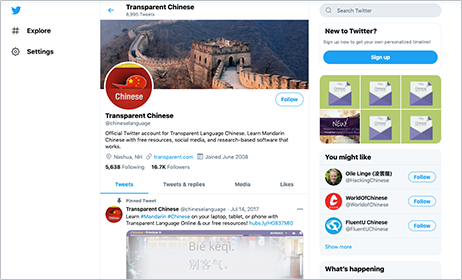
Follow us at @TLILanguages
Choose your language:
Afrikaans, Arabic, Chinese, Danish, Dari, Dutch, English, Esperanto, Farsi, French, German, Greek, Hebrew, Hindi, Icelandic, Indonesian, Inglês, Irish, Italian, Japanese, Korean, Latin, Norwegian, Pashto, Polish, Brazilian Portuguese, Russian, Spanish, Swedish, Thai, Urdu, Zulu
Downloadable eBooks
Helpful tips and guides for learning a language
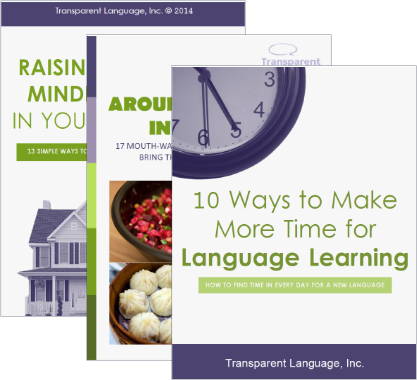
Stay in the know with best practices for learning a new language. We've publishsed a variety of eBooks on helpful topics, such as:
- Raising Globally-Minded Children
- 9 Tactics for Memorizing, Understanding, and Retaining a Foreign Language
- 10 Ways to Make More Time for Language Learning
- and many more!
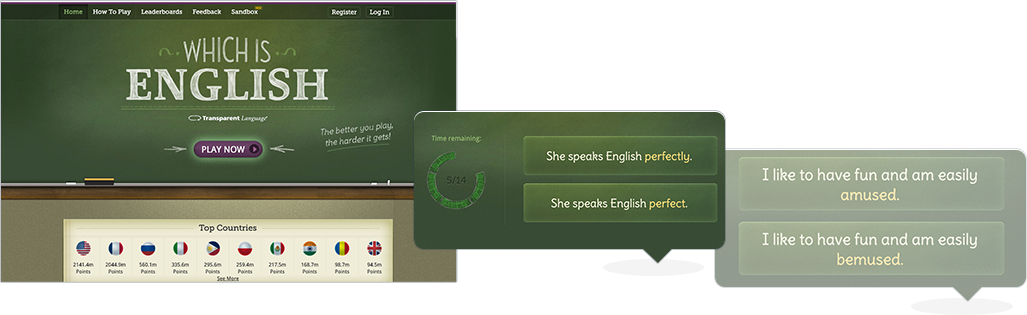
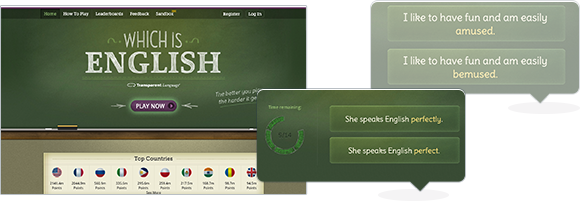
Which is English
The better you play, the harder it gets!
Free Courses
Take a test drive of Transparent Language Online with our free courses!