Swahili (more properly, Kiswahili) is the first language of
approximately one million people, mostly in Kenya and Tanzania, but also in Uganda,
Rwanda, Burundi, and the Democratic Republic of Congo (formerly Zaire). An additional 10
million people speak it as a second language.
Swahili is part of the Bantu group of languages which stems
from the Niger-Congo language family. It was strongly influenced by both Arabic and
Persian, as is evident from the many words of Arab and Persian origin found in the Swahili
language today. Even the name "Swahili" comes from an Arabic word meaning
"by the coast." The language began to develop in the 7th century, but it wasn't
brought inland until about the 19th century. Later, the Germans adopted Swahili as the
language of administration in Tanganyika. In 1970, it was made the official language of
Kenya.
You may recognize a few of the Swahili words that have been
incorporated into the English language. The word
tote, for example, is from the
Swahili verb
tuta meaning "to haul." Also, the word
Kwanza (an
African holiday) comes from Swahili. And you may recognize the words
simba (lion)
and
rafiki (friend) from a certain popular animated motion picture!
The reverse is also true. Many English words have been
incorporated into Swahili, like "pencil" (
penseli), "computer"
(
kompyuta) and "machine" (
mashine).
It is comforting to recognize some words when studying
a foreign language. But be careful! Don't assume that a Swahili word always means what you
expect. The word
leo, for example, doesn't mean "lion." It means
today.
And
bin does not mean "container;" it means
son of. And don't
think the word
kiwi is the name of a fruit-- it means
to dazzle.
Unlike most European languages, Swahili makes no
grammatical distinction between formal and informal address.
One of the most difficult aspects of learning Swahili is
its system of nouns. Nouns in Swahili are divided into cases based on the way that they
are spelled. There are sixteen noun cases in all! But don't worry-- that includes singular
and plural.
You might be perplexed at first by the way that time is
expressed in Swahili. In the Swahili culture, there are two 12-hour cycles each day. The
day cycle begins at sunrise (approximately 6:00 AM) and ends at sunset. The evening cycle
begins at sunset (approximately 6:00 PM) and lasts until dawn. So 8 AM is expressed in
Swahili as
saa mbili asubuhi, or literally "two o'clock in the morning."
At noon, it is
saa sita, or "six o'clock."
Transparent Language's
Languages of the World
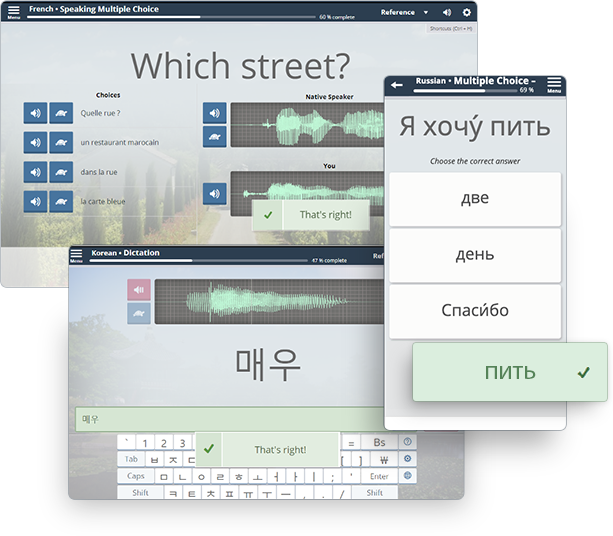
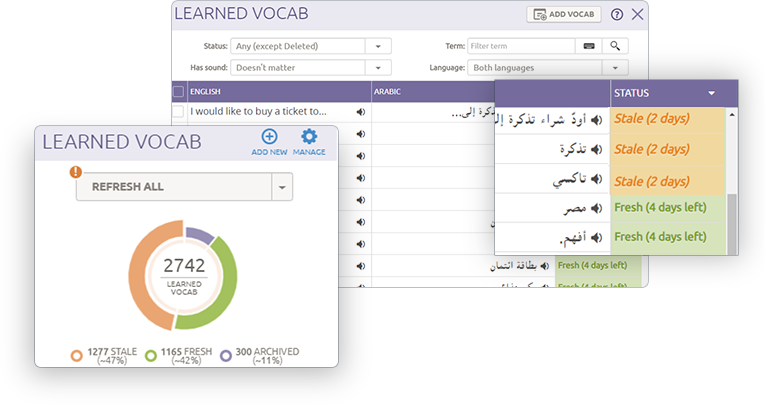
is a great way to learn Swahili. This multimedia
Swahili software program enables you to hear, read, and
speak Swahili. We wish you the best of luck in your endeavors to learn Swahili!