The Danish language (Dansk) is the official language of the Kingdom of Denmark, as well as Greenland and the Faroe Islands. Danish is spoken by more than 5 million
people in Denmark and in a few communities south of the German border.
Danish is a member of the Indo-European language family. Along with Norwegian, Swedish,
and Icelandic, the Danish language is part of the Northern Germanic branch that comprises the
Scandinavian languages. Danish began to separate from the other Scandinavian languages
about 1000 A.D., and it is clearly the language that has diverged the furthest from Old
Norse-- the ancestor of the modern Scandinavian languages.
During the Middle Ages, Danish lost the old case system, merged the masculine and
feminine genders into a single common one, and acquired many Low German words, prefixes,
and suffixes from contact with the traders of the Hanseatic League. The oldest Danish
records are runic inscriptions from 250-800 A.D., found in sites ranging from Jutland to
southern Sweden.
Even though Denmark is small in territory and population, it has played a notable role in
European history. The Danish crown dominated northwestern Europe for the duration of the
Middle Ages. This fact can be traced by the stamp that Danish left on the languages of
Sweden, Norway, and Iceland.
Danish is closely related to Norwegian, with which it is mutually intelligible,
especially when written. In fact, the Danish and Norwegian alphabets are identical.
During the centuries when Denmark and Norway were joined as one country, a dialect closer to Danish than Norwegian was spoken in the Norwegian cities. This dialog is sometimes referred to
as Dano-Norwegian and is still in use today.
Slab,
scoff,
kip,
ballast, and
dangle are all English
words of Danish origin.
Danish speakers use polite pronouns of address (De and Dem) in the second person
singular that are identical with the third person plural forms (de and dem).
The usage of the polite form of address has changed radically since the 1960s. Nowadays
most people use the informal du or dig in conversation, regardless of
differences in age and social status between the speaker and the person being addressed.
Since Danish is a Germanic language, like English, there are a number of false
cognates. You may be misled into thinking that you are asking, "Is the mule in
the barn?" when you are really asking whether the muzzle is in the child!
If you order someone to get her, you are really saying: "Get here!"
You assume that you are requesting: "Let me see the tag of the rig!"
Really you are asking to see the roof of the rich. So be careful! Browsing
through the dictionary yields the following list of false friends: art (sort,
kind), gang (walk), god (good), skin (light, glare), slam
(mud) and torn (thorn, spine).
Modern Danish has only two cases: the nominative and the genitive. There are also two distinct genders, common and neuter. About 75% of all nouns are
common gender.
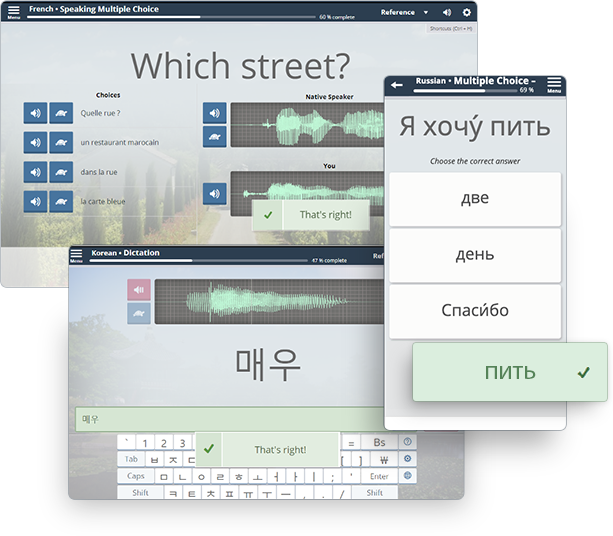
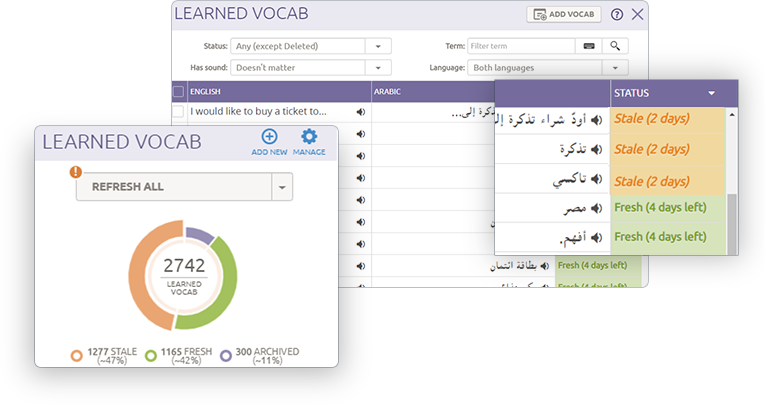
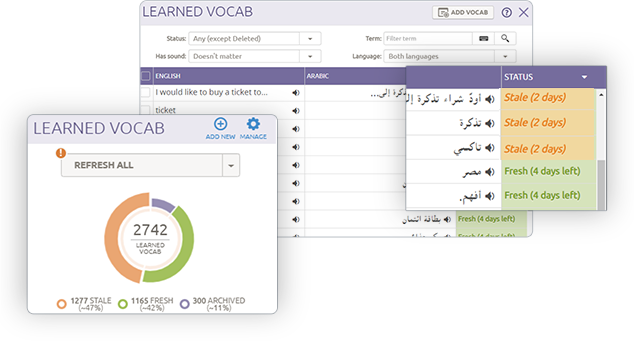
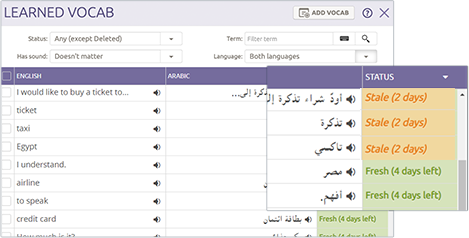
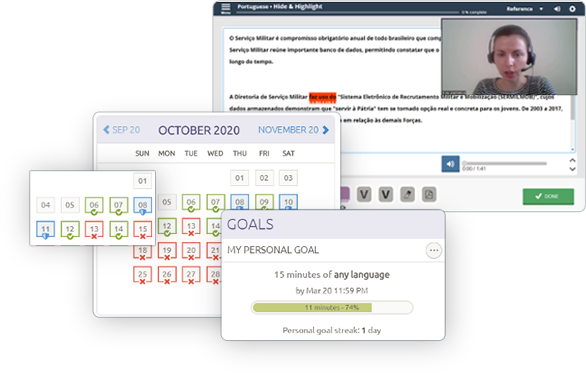
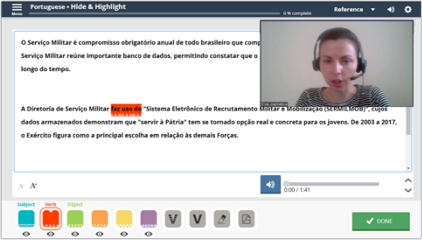
With the assistance of Danish software programs like Languages of the World, you will be able to study the Danish language in a very
dynamic way. The text material is sound-enabled, which means that you can hear each word
and sentence pronounced by a native speaker of Danish. Languages of the World
features conversation practice, providing you with the opportunity to participate in real
Danish conversations. You may also record your own voice and compare it with the native
speakers voice.
It has never been easier to learn Danish and to begin to speak Danish than with the language resources and the language software available from Transparent Language. We wish you much success and a lot of fun learning Danish!