Logo
Live chat by BoldChat
McAfee Secure sites help keep you safe from identity theft, credit card fraud, spyware, spam, viruses and online scams
Call Toll Free: (888) 245-1829 Contact Us Customer Service Tech Support Guarantee
Learn Czech Language
Czech Learning
About Czech
Czech Products
Games
Quizzes
Resources
Learn Czech with Free Software Downloads

Mailing List


Exclusive offers.
Product highlights.
Language updates.
Join our mailng list today!


Overview of the Czech Language

The Czech language is spoken in the Czech Republic, where several dialects of the language are spoken. Towns and villages have maintained their own dialects to date, but the larger cities have not. The standard language used in written documents and business negotiations is the dialect of Prague.

Czech is one of many Balto-Slavic languages spoken in Eastern Europe. Historians are not sure when the Slavic dialects became separate languages, but there are indications that Czech, Slovak, and Moravian were spoken as separate languages in the 8th century. The earliest written documents in the Czech language date back to the 11th century. Czech was formerly called Bohemian - an indication of its origins, because before the 14th century, Czech was looked down upon as a peasant language. John Huss standardized the spelling in the 14th century and brought dignity to the language, in addition to becoming a national hero!

Czech Vocabulary

To a certain extent, Czech and Slovak are mutually intelligible languages, meaning that they share a great deal of vocabulary. Speakers of one language can sometimes understand the other, if they speak carefully and take care.

Czech has also loaned words to other languages, including English. English words of Czech origin include howitzer, robot, calash, pram, and pistol.

The following Czech words look like English, but watch out! They have entirely different meanings. If you tell someone you live in a houska, they may react with shock: houska means 'roll' in Czech! The word byt, similar to the English words 'byte' and 'bite', actually means 'apartment'. The word internát, which might put you in mind of the World Wide Web, in fact refers to a 'boarding house'. The word jet does not refer to an airplane, although it does mean 'to go'. Plus, the word pít means 'drink'.

Formal and Informal Address in the Czech Language

Czechs are quite formal in their use of language, especially when addressing one another. The familiar form of you, ty, is only used when speaking Czech with relatives and close friends. The formal form of you, vy, is always used in any other instance. In addition, the terms pan, paní, and slecna (Mr., Mrs., and Miss, respectively) are commonly used when addressing someone.

Czech Grammar and Czech Pronunciation

There are seven noun cases in Czech (nominative, genitive, dative, accusative, locative, instrumental, and vocative), as opposed to the two in English. Also, Czech nouns decline based on number and case.

Czech pronunciation can be challenging for English speakers, because some Czech letters are not pronounced the same way they are in English. For example, C is pronounced ts and w is pronounced v. Plus, take note that r is considered a vowel. Because of this, you may see many strange looking words, such as krk (neck) and smrt (death).

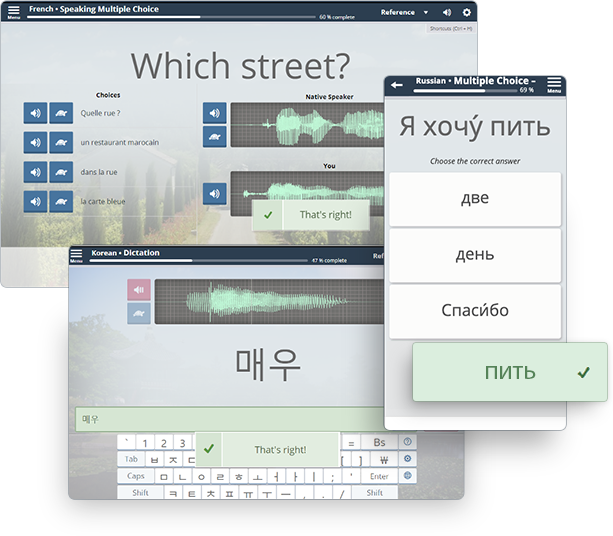
Czech software programs are a great way to begin to speak Czech. This multimedia program enables you to hear, read, and speak the language. It has never been easier to learn Czech than with the help of the resources and language software available from Transparent Language.

We wish you the best of luck with your Czech learning!

Czech Byki Deluxe


Home | About | Products | Languages | Store | Partners | Government | Contact Us | Customer Service | Technical Support | Privacy Policy | Terms and Conditions

If you have comments about this language learning site, language software, or ways to learn languages, please contact us.
©2009 Transparent Language. All Rights Reserved. www.transparent.com
Please also visit our language websites:
Arabic | Chinese | Dutch | French | German | Hebrew | Italian | Japanese | Latin | Polish | Portuguese | Russian | Spanish | Swedish